 Shay
Shay


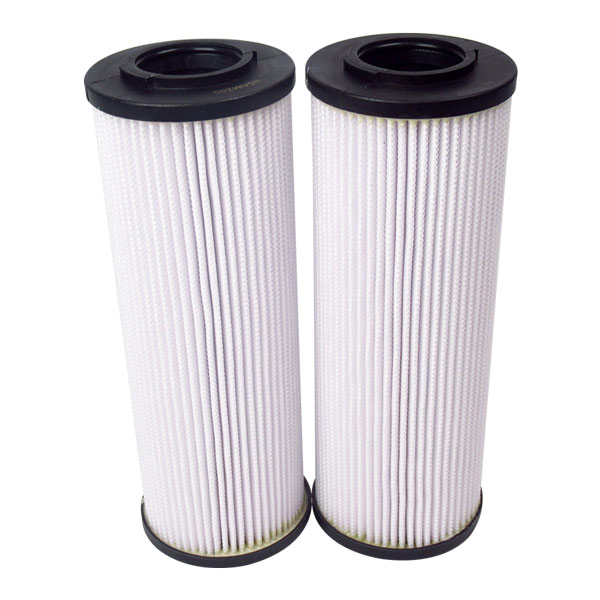


Replace Oil Filter Element N5AM002
Product SpecificationsHuahang
Part number |
N5AM002 |
Filter layer |
Fiberglass/Stainless steel |
Filtration accuracy |
1~25μm |
End caps |
Plastic |


faqHuahang
1. What harm can low-quality hydraulic oil filters cause to equipment?
Cleaning is the primary issue when hydraulic oil enters the hydraulic system for operation. Hydraulic pollution is not the dirty phenomenon that people imagine at a glance, but rather the seemingly clean oil that is actually filled with thousands of pollution particles. The filtering effect of low-quality hydraulic oil filter element is poor, and it cannot effectively prevent dirt and other impurities from entering the hydraulic system. If small impurity particles enter the hydraulic system, they will scratch the hydraulic pump (high-precision plunger pumps are commonly used on excavators, wear causes increased clearance, hydraulic pressure cannot rise, and thus work weakly), block the valve, block the oil port, and cause machine failure.
2. How to determine whether hydraulic components are damaged by regularly inspecting and replacing hydraulic oil filter elements?
When replacing the hydraulic oil filter element, please check if there are metal particles or debris at the bottom of the filter element. If there are copper or iron chips, it indicates that the hydraulic pump, hydraulic motor or valve may be damaged or about to be damaged. If there are rubber particles, it indicates that the hydraulic cylinder seal is damaged.
3. The difference between fiberglass products and ordinary hydraulic filter paper
Some of our company's products are made of fiberglass materials with higher filtration accuracy. Compared with ordinary hydraulic filter paper (ordinary wood pulp filter paper, limited by the thickness of its wood pulp fibers, the filtration accuracy is limited, while fiberglass has finer fibers, so it can achieve higher filtration accuracy), fiberglass materials have higher filtration accuracy and stronger resistance to strong pressure.
| Q33101-020 | 1125030-T68L0 | AA2958 |
| C66411 | D5010224459 | 1109910-KR100 |
| C22612-020 | D5010224563 | 1012010-E8100 |
| CA3102 | D5010477855 | 1117010-E8100 |
| E21321-020 | D5010224563 | 1125030-KR110 |
| 1109010-E | D5010224563 | KW2342 |
| 1109910-TL380 | HF0237 | 1119QE-001 |
| AA2995 | A041Y662 | 1012010-E4100 |
| AA02995 | C4327369 | 1117QE-001 |
| AF25127/AF26434 | FS36260 | E21321-020 |
| AA2960 | 4327370 | FF5236 |
| AF26433+AF26434 | SH11171007369 | FS20116 |
| AA90156 | C4365703 | LF9080 |
| AF26625+AF26626 | 4960198 | FS36277 |
| A1788 | 1125010-K22K1 | FS36247 |
| AF26625 | PL420 | FF5767 |
| AA90156 | SH10321009009 | FS19898 |
| AA90134 | SH11171005010 | FS20133 |
| A029X186 | SH10121002010 | FS20134 |
| 1012BF11-02500 | SH11071007010 | FS19816 |
| FS20120 | SH10122001013 | R120T-DF-01 |
| AF26569+AF26570 | SH11052009922 | FS20129 |
| AF25812+AF25813 | SH11092002960 | FS20126 |
| 1012010-E8100 | SH11091000030 | FS36260 |
| 1117010-E8100 | 1109C24-020 | FF63013 |
| 1125030-KR110 | 5041995510 | FS53016 |
| 1109010-KR110 | WRF0086-Z1 | LF17500 |
| 3909-19013 | 81 22 53221117-000 | FS20090 |
| 8-94206763 | 5802280039 | D5010681013 |
| D28D11-5DA | 5801312864 | D5010477855 |
| FF5328 | 53121075-000A | 1012010-E4200 |
| 1117QE-020 | WR W0058-Z1 | FS36259 |
| KW1716 | W0058-Z2 81 22 | FF5687 |
| KW1717PU | 53121280-000 | FS36230 |
| 4409021530003 | S00007427 | 1125010-E4100 |
| 1457434310 | WR00528 | FS36267 |
| 1125030-KS110 | F0001-Z1 | AS2474 |
| 4389022 | 81 22 53221088-000 | LF14000NN |
| C4331005 | 5801820210 | LF670 |
| 4365842 | WB02 | LF777 |
| 91FG026 | 1100-728051 | FS1000 |
| 1125030-H02L0 | R120P | WF2076 |
HOW TO CHOOSE OIL FILTERHuahang
1. Inlet and outlet diameter
In principle, the inlet and outlet diameter of the stainless steel filter element should not be smaller than the inlet diameter of the matching pump, generally consistent with the inlet pipeline diameter.
2. Selection of nominal pressure and aperture mesh
Determine the pressure level of the stainless steel filter element based on the maximum pressure that may occur in the filtration pipeline, mainly considering the particle size of impurities to be intercepted, according to the process requirements of the medium flow.
3. Filter Element Material
The material of stainless steel filter cartridges is generally chosen to be the same as the material of the connected process pipeline. For different service conditions, cast iron, carbon steel, low alloy steel, or stainless steel filter cartridges can be considered.
4. Filter element resistance loss
Calculate the pressure loss based on the actual medium. The installation of filter elements should not affect the normal operation of the system. The number of filter elements can be increased according to the situation to reduce the pressure loss.