


 Shay
Shay


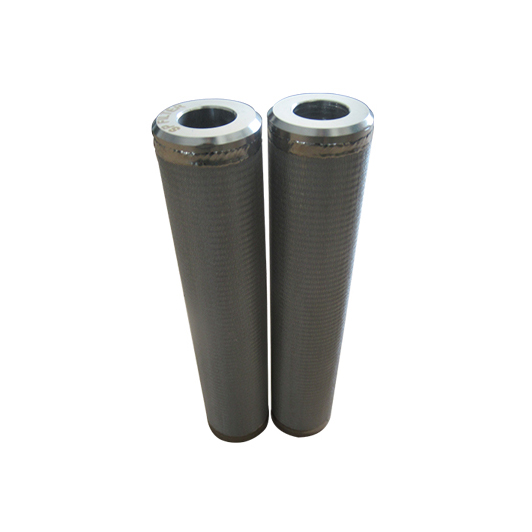
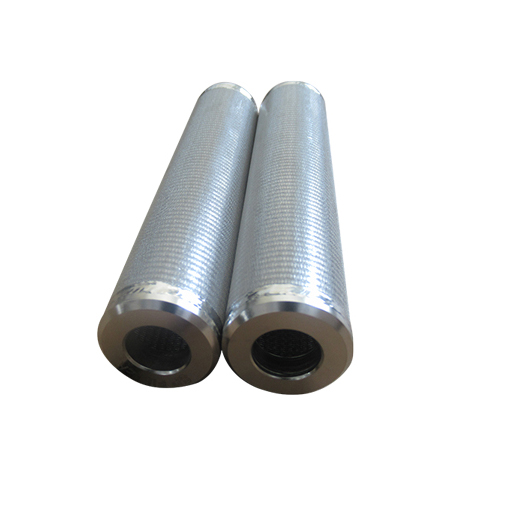
Sintered Mesh Filter Element
Product Description
Custom-made sintered mesh filter element is high-performance filtration components designed to meet specific application requirements that standard off-the-shelf filters cannot fulfill. They are manufactured by precisely layering multiple layers of stainless steel mesh and then sintering them together in a high-temperature furnace. This process creates an integrated porous structure with inherent strength, precise pore geometry, and superior permeability.
Unlike woven mesh, the sintered mesh do not unravel or shift, ensuring consistent filtration performance and absolute particle retention. These filter elements are ideal for harsh environments involving high temperatures, high pressures, and corrosive media, as well as applications requiring exceptional reliability and ease of cleaning.
Specification
Below is the specification of the standard sintered mesh filter.If you have any needs of this kind of filter, please send your inquiry to us to get the price.
| Dimension | Customized |
| Filter material | 304/ 316(L) Stainless steel |
| Maximum working temperature | Up to 480℃ |
| Porosity | Typically 20% - 50%, customizable for flow requirements |
| Maximum Pressure Differential | Exceeding 5 MPa, based on wall thickness and material |
| End connections | Weld-ready, flanged, threaded (NPT, BSP), or with integrated O-ring grooves. |
| Brand | Huahang Filter |
| Package | Neutral carton package |
Characteristics of sintered mesh filter made from different materials
The table below compares the characteristics of sintered mesh filter elements made from different materials, from various perspectives.
| Characteristic | 304 Stainless steel sintered mesh filter | 316 Stainless steel sintered mesh filter | 316L Stainless steel sintered mesh filter |
|---|---|---|---|
| Corrosion Resistance (Primary Difference) | Good | Excellent | Optimal (especially post-welding) |
| Mechanical Strength | Relatively high (due to slightly higher carbon) | High | Slightly lower than 316 (due to low carbon) |
| Maximum Operating Temperature | Approx. 800°C | Approx. 800°C | Slightly lower than 316 (but sufficient for most applications) |
| Weldability & Fabrication | Good | Good | Optimal |
| Cost | Lowest | Higher | Highest |
Images of Sintered Mesh Filter

Feel free to contact us for more details about sintered mesh filter.
Structural Feature
Based on the number of layers and design purpose, common sintered mesh filter elements can be divided into several types, each with different performance characteristics:
| Structure Type | Layers | Main Characteristics | Advantages | Typical Applications |
|---|---|---|---|---|
| Standard Five-Layer Sintered Mesh | 5 layers (Coarse-Fine-Coarse-Fine-Coarse) | Gradient filtration, optimal balance of strength and precision | High dirt-holding capacity, excellent mechanical strength, superior overall performance | Polymer melt filtration, chemical processing, hydraulic oil filtration |
| Three-Layer Sintered Mesh | 3 layers (Coarse-Fine-Coarse) | Simplified structure, focus on high flow | Lower flow resistance, cost-effective | Gas filtration, high-flow pre-filtration, dispersion |
| High-Strength Sintered Mesh | Multiple layers (with extra support layers) | Structural integrity under extreme pressure differentials | Exceptional resistance to collapse, extremely high rigidity | High-pressure pump protection, high-pressure gas systems, reactor internals |
| High-Precision Sintered Mesh | Multiple layers (with extra precision layers) | Pursuit of ultimate filtration precision | Can stably intercept sub-micron particles | Pharmaceutical sterile filtration, high-purity chemicals, precision fuel filtration |
Huahang Filter——Manufacturer of Sintered Mesh Filter
Huahang Filter specializes in the engineering design and manufacturing of advanced sintered metal filtration solutions. Our expertise stems from precision manufacturing and deep application knowledge. Equipped with precision sintering furnaces and CNC machines, we maintain strict tolerances and batch-to-batch consistency.
We have our own factory, providing customers with one-stop service and recommending the best filter design solutions based on their specific process conditions. Our products meet ISO and CE standards and are suitable for applications in industries such as petrochemicals, plastics, and pharmaceuticals.

Customized Service
At Huahang Filter, we offer customized services based on our customers' operating conditions:
⇒ Material Selection: We provide recommendations for the best alloy (SS316L, nickel, etc.) based on your fluid compatibility, temperature, and corrosion resistance requirements.
⇒ Performance Specifications: We customize micron rating (absolute or nominal), porosity, thickness, and permeability based on your target filtration efficiency and flow rate.
⇒ Filter Element Structure: We design precise shapes and dimensions – whether it's a tubular filter of a specific length/diameter, a conical filter, a multi-layer disc stack filter, or a complex manifold assembly.
⇒ Integration Details: We design end connections, flanges, welds, or mounting hardware to ensure a perfect fit and seal with your housing or vessel.

FAQ
Q1: Can sintered mesh filter elements be cleaned and reused?
A: Yes! One of the primary advantages of sintered mesh technology is its reusability. Common cleaning methods include:
· Backflushing/Backpulsing: Reverse flow to dislodge captured particles
· Ultrasonic Cleaning: Thorough removal of embedded contaminants using ultrasonic energy
· Chemical Cleaning: Soaking in compatible acids, solvents, or cleaning solutions
· High-Temperature Regeneration: Burning off organic contaminants (up to 480°C)
With proper cleaning, these elements can achieve a service life of 1-2 years or longer, offering significant cost savings over disposable filters .
Q2: What is the maximum operating pressure?
A: The pressure rating depends on the specific element configuration, support structure, diameter, and end connection type. Standard sintered mesh elements can withstand operating pressures up to 5.0 MPa (50 bar) . Heavy-duty configurations with reinforced construction are available for pressures up to 30 MPa (300 bar) or higher. Please consult our engineering team for specific pressure requirements.
Q3: What end connection types are available?
A: Sintered mesh filter elements are available with various connection options to fit most filter housings:
· Standard Cartridge Fittings: 222 O-ring, 226 O-ring, 220, 215 (with DOE, SOE, or fin configurations)
· Threaded Connections: NPT, BSP, Metric (male/female)
· Flanged Connections: Various flange standards and sizes (ANSI, DIN, JIS)
· Sanitary Fittings: Tri-clamp for pharmaceutical and food applications
· Custom Connections: Designed to your specific housing requirements
Q4: How do I select the correct micron rating for my application?
A: Selection depends on your specific requirements:
· 0.3-1μm: Fine filtration for pharmaceutical, semiconductor, and high-purity applications
· 2-5μm: General-purpose for hydraulic systems, chemical processing, and beverage filtration
· 10-25μm: Medium filtration for industrial water, petrochemical, and lubrication systems
· 40-100μm: Coarse filtration for pre-filtration, cooling water, and particle removal
· 100μm+: Strainer applications, pump protection, and high-viscosity fluids
When in doubt, consult our engineering team with details about your fluid, desired outlet quality, and operating conditions .